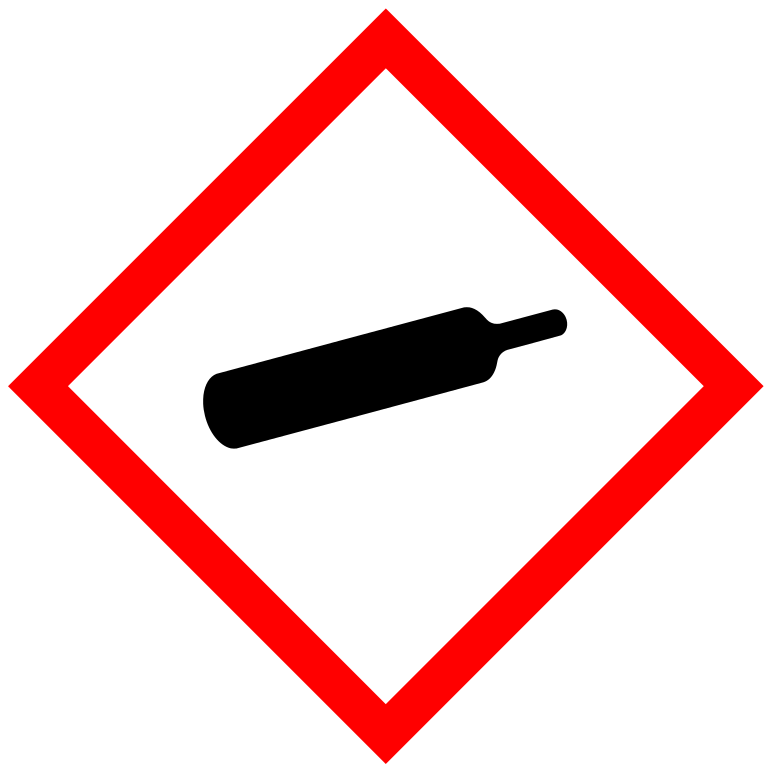
- Code
- GHS04
- Symbol
- Gas cylinder
- Hazard
- Gas under pressure
- Signal word
- Warning
What it means
The gas cylinder marks gases under pressure — compressed, liquefied, refrigerated liquefied or dissolved gases — which may explode if heated or, when refrigerated, cause cryogenic burns.
Hazard classes that trigger it
Classification in any of these categories puts GHS04 on the label, taken from the CLP label elements. A category with no signal word carries the pictogram alone.
| Category | H | Hazard statement | Signal word |
|---|---|---|---|
| Gases under pressure | |||
| Press. Gas (Comp.) | H280 | Contains gas under pressure; may explode if heated. | Warning |
| Press. Gas (Liq.) | H280 | Contains gas under pressure; may explode if heated. | Warning |
| Press. Gas (Ref. Liq.) | H281 | Contains refrigerated gas; may cause cryogenic burns or injury. | Warning |
| Press. Gas (Diss.) | H280 | Contains gas under pressure; may explode if heated. | Warning |
On candles, wax melts, reed diffusers and air sprays
Aerosol air fresheners contain a propellant under pressure, yet they are classified in the separate aerosols hazard class rather than as gases under pressure, so an aerosol can carries GHS02 (when flammable) and not GHS04. Candles, wax melts and reed diffusers do not carry it.
Live label demos: Candles · Wax melts & snap bars · Reed diffusers
Precedence rules involving this pictogram
-
Art. 26(1)(e)
If the hazard pictogram ‘GHS02’ or ‘GHS06’ applies, the use of the hazard pictogram ‘GHS04’ shall be optional.
General reference, not legal advice: your label follows your own product’s classification.