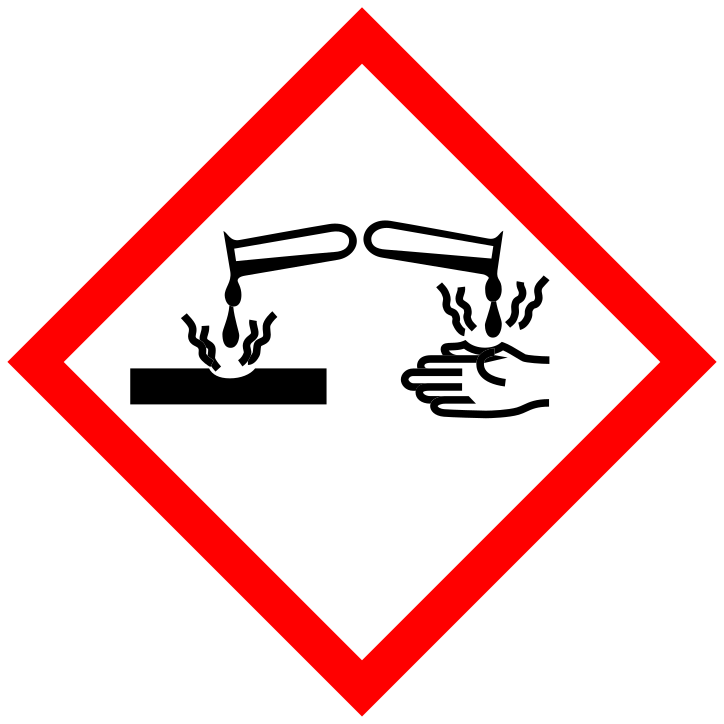
- Code
- GHS05
- Symbol
- Corrosion
- Hazard
- Corrosive
- Signal word
- Danger Warning
What it means
The corrosion pictogram marks materials that destroy skin (skin corrosion), cause serious, irreversible eye damage, or corrode metals.
Hazard classes that trigger it
Classification in any of these categories puts GHS05 on the label, taken from the CLP label elements. A category with no signal word carries the pictogram alone.
| Category | H | Hazard statement | Signal word |
|---|---|---|---|
| Corrosive to metals | |||
| Met. Corr. 1 | H290 | May be corrosive to metals. | Warning |
| Skin corrosion / irritation | |||
| Skin Corr. 1 | H314 | Causes severe skin burns and eye damage. | Danger |
| Skin Corr. 1A | H314 | Causes severe skin burns and eye damage. | Danger |
| Skin Corr. 1B | H314 | Causes severe skin burns and eye damage. | Danger |
| Skin Corr. 1C | H314 | Causes severe skin burns and eye damage. | Danger |
| Serious eye damage / eye irritation | |||
| Eye Dam. 1 | H318 | Causes serious eye damage. | Danger |
On candles, wax melts, reed diffusers and air sprays
It is uncommon on finished scented products, but it can reach a reed diffuser or room spray liquid when the formula carries enough of an ingredient classified Eye Dam. 1 (H318) — some fragrance materials and surfactants are. Candles and wax melts very rarely carry it.
Live label demos: Candles · Wax melts & snap bars · Reed diffusers
Precedence rules involving this pictogram
-
Art. 26(1)(c)
If the hazard pictogram ‘GHS05’ applies, the hazard pictogram ‘GHS07’ shall not appear for skin or eye irritation.
General reference, not legal advice: your label follows your own product’s classification.