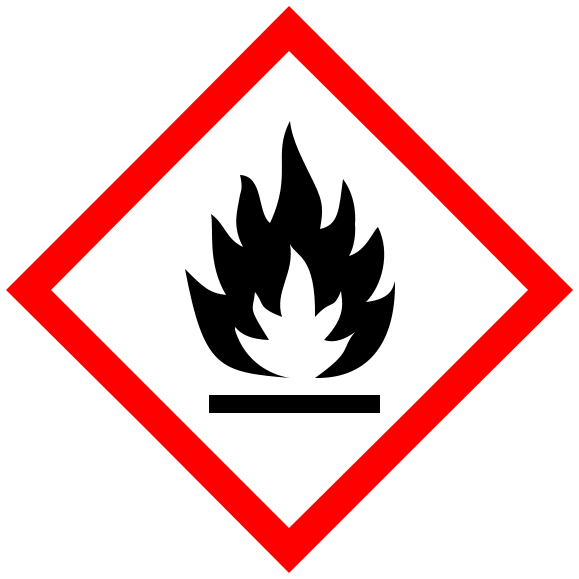
- Code
- GHS02
- Symbol
- Flamme
- Gefahr
- Entzündbar
- Signalwort
- Gefahr Achtung
Bedeutung
The flame marks flammable materials: gases, aerosols, liquids and solids that catch fire easily, plus pyrophoric, self-heating and water-reactive substances and some self-reactive substances and organic peroxides.
For liquids the category follows the flash point and boiling point: the lower the flash point, the more severe the category and the stronger the signal word.
Gefahrenklassen, die es auslösen
Eine Einstufung in eine dieser Kategorien bringt GHS02 auf das Etikett, gemäß den CLP-Kennzeichnungselementen. Eine Kategorie ohne Signalwort trägt nur das Piktogramm.
| Kategorie | H | Gefahrenhinweis | Signalwort |
|---|---|---|---|
| Entzündbare Gase | |||
| Flam. Gas 1 | H220 | Extrem entzündbares Gas. | Gefahr |
| Aerosole | |||
| Aerosol 1 | H222 | Extrem entzündbares Aerosol. | Gefahr |
| Aerosol 2 | H223 | Entzündbares Aerosol. | Achtung |
| Entzündbare Flüssigkeiten | |||
| Flam. Liq. 1 | H224 | Flüssigkeit und Dampf extrem entzündbar. | Gefahr |
| Flam. Liq. 2 | H225 | Flüssigkeit und Dampf leicht entzündbar. | Gefahr |
| Flam. Liq. 3 | H226 | Flüssigkeit und Dampf entzündbar. | Achtung |
| Entzündbare Feststoffe | |||
| Flam. Sol. 1 | H228 | Entzündbarer Feststoff. | Gefahr |
| Flam. Sol. 2 | H228 | Entzündbarer Feststoff. | Achtung |
| Selbstzersetzliche Stoffe und Gemische | |||
| Self-react. B | H241 | Erwärmung kann Brand oder Explosion verursachen. | Gefahr |
| Self-react. CD | H242 | Erwärmung kann Brand verursachen. | Gefahr |
| Self-react. EF | H242 | Erwärmung kann Brand verursachen. | Achtung |
| Pyrophore Flüssigkeiten | |||
| Pyr. Liq. 1 | H250 | Entzündet sich in Berührung mit Luft von selbst. | Gefahr |
| Pyrophore Feststoffe | |||
| Pyr. Sol. 1 | H250 | Entzündet sich in Berührung mit Luft von selbst. | Gefahr |
| Selbsterhitzungsfähige Stoffe und Gemische | |||
| Self-heat. 1 | H251 | Selbsterhitzungsfähig; kann in Brand geraten. | Gefahr |
| Self-heat. 2 | H252 | In großen Mengen selbsterhitzungsfähig; kann in Brand geraten. | Achtung |
| Stoffe und Gemische, die in Berührung mit Wasser entzündbare Gase entwickeln | |||
| Water-react. 1 | H260 | In Berührung mit Wasser entstehen entzündbare Gase, die sich spontan entzünden können. | Gefahr |
| Water-react. 2 | H261 | In Berührung mit Wasser entstehen entzündbare Gase. | Gefahr |
| Water-react. 3 | H261 | In Berührung mit Wasser entstehen entzündbare Gase. | Achtung |
| Organische Peroxide | |||
| Org. Perox. B | H241 | Erwärmung kann Brand oder Explosion verursachen. | Gefahr |
| Org. Perox. CD | H242 | Erwärmung kann Brand verursachen. | Gefahr |
| Org. Perox. EF | H242 | Erwärmung kann Brand verursachen. | Achtung |
Auf Kerzen, Duftwachs, Raumduft-Diffusern und Raumsprays
Reed diffusers and room sprays based on ethanol or isopropanol are usually Flam. Liq. 2 (H225) or 3 (H226), so they carry the flame. Air sprays in aerosol cans are classified as aerosols, Aerosol 1 (H222) or 2 (H223), and carry it too.
Many fragrance oils are Flam. Liq. 3 on their own SDS, but a finished candle or wax melt is a solid at a few percent fragrance load and does not normally carry GHS02.
Live-Etikettendemos: Kerzen · Duftwachs & Snap Bars · Raumduft-Diffuser
Rangfolgeregeln für dieses Piktogramm
-
Art. 26(1)(a)
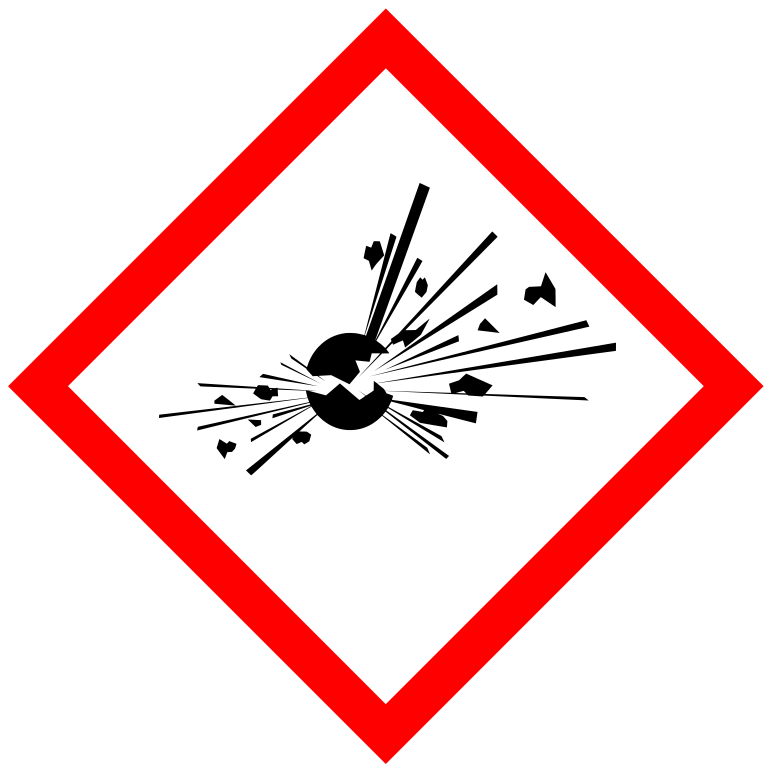
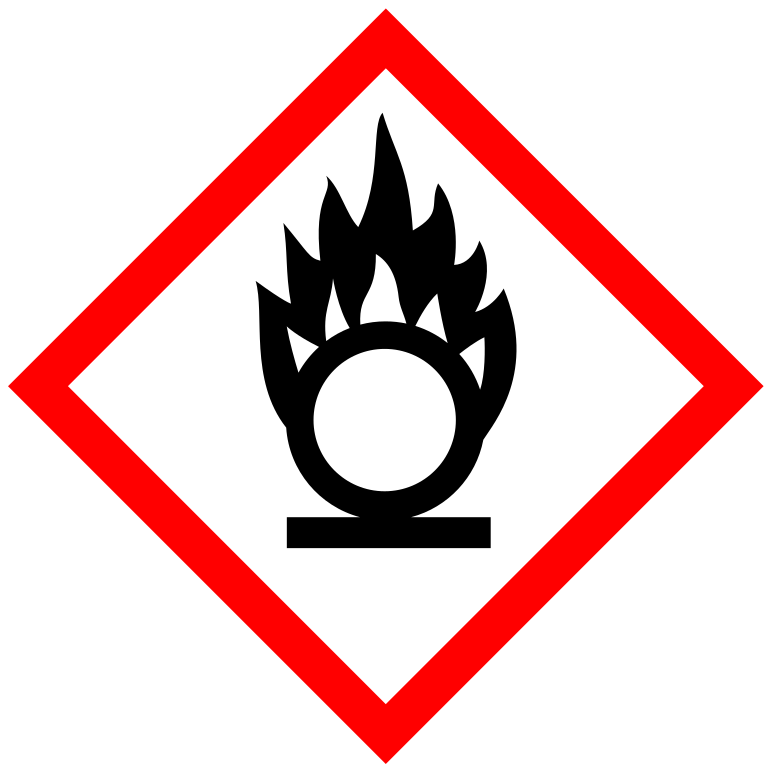
If the hazard pictogram ‘GHS01’ applies, the use of the hazard pictograms ‘GHS02’ and ‘GHS03’ shall be optional, except in cases where more than one of these hazard pictograms are compulsory.
-
Art. 26(1)(e)
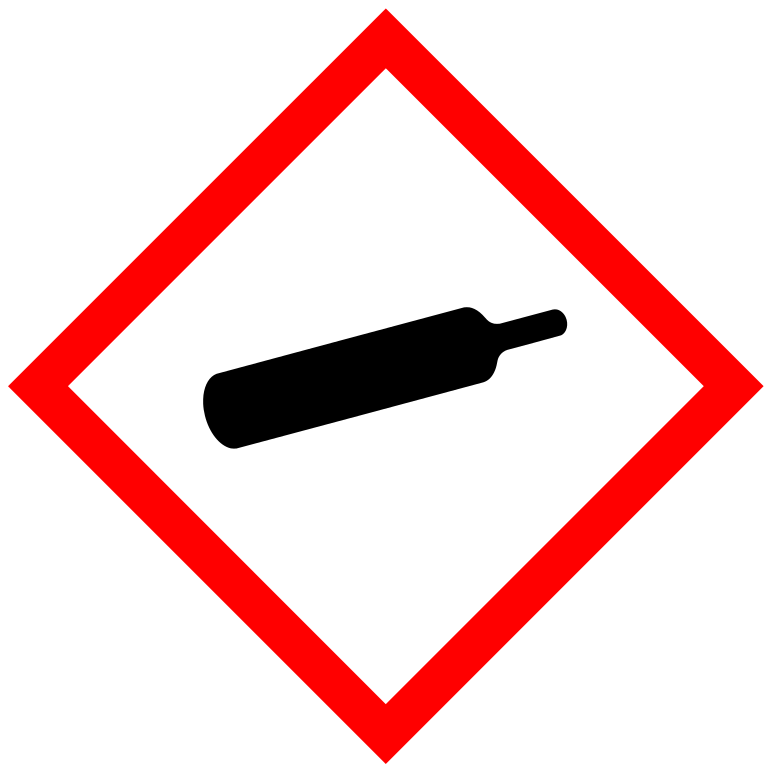
If the hazard pictogram ‘GHS02’ or ‘GHS06’ applies, the use of the hazard pictogram ‘GHS04’ shall be optional.
Allgemeine Information, keine Rechtsberatung: Ihr Etikett richtet sich nach der Einstufung Ihres eigenen Produkts.